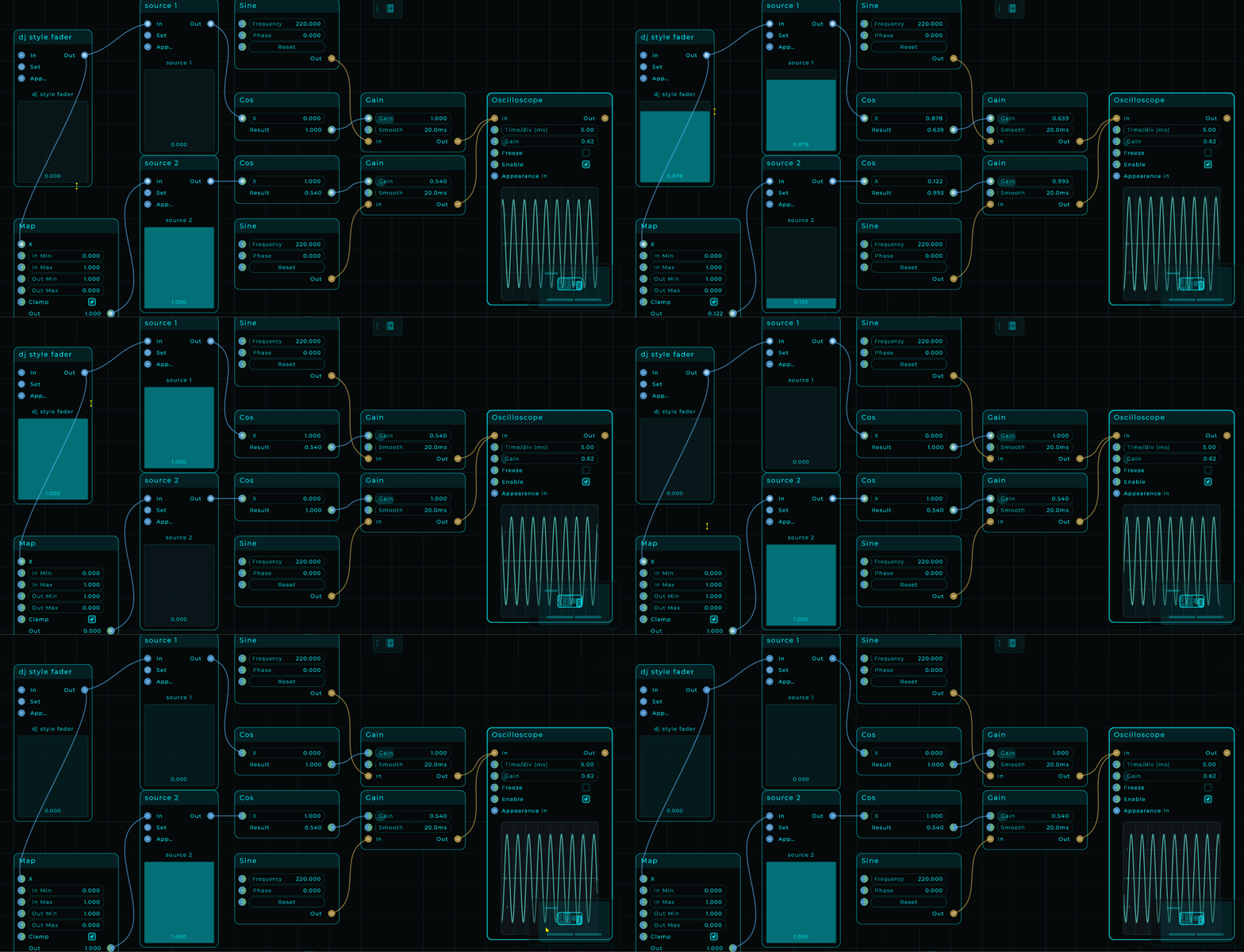
i am trying to figure out how to use cos to create a dj style fader between 2 audio sourses. right now i cant get it to go to zero completely resulting in one signal being fully heared and the other a bit where it should be zero. (i only use a Oscilloscope to monitor no real audio here)
if i did it right there should be zero detectable changes on the Oscilloscope but right now there is a bump and that remaining 0.540
the problem i have is that if i use a map afterwards to get rid of the remaining 0.540 i also loose cos scaling again
i am probably missing something very obvious anyone?
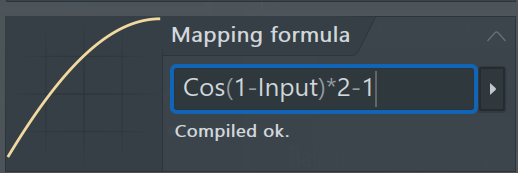
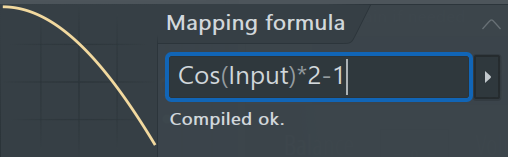
That seems also very logical, you are now refering to FL studio which can use perhaps a higher resolution instead of Mnodes and a float?. in my opinion a very logical difference between them.
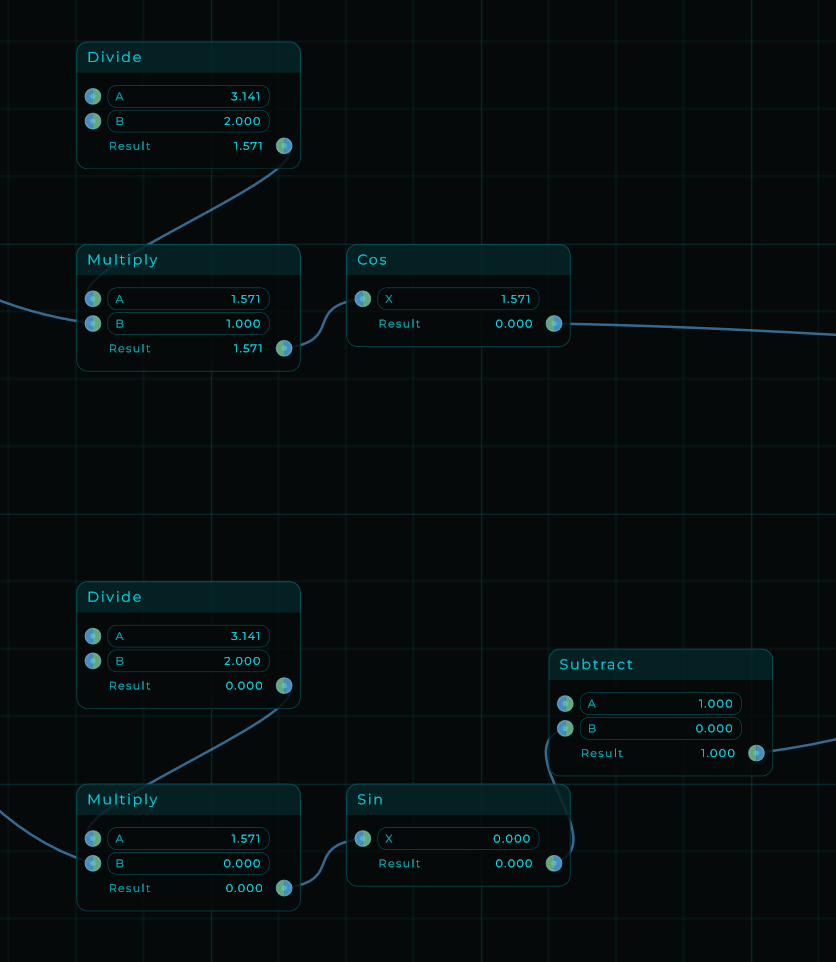
It’s like, i am using pi as 3.141 instead of 3.1415927
For sure there will be a difference..
It’s like having a curved bridge, can be easy to walk on. the longer you make it you dont even realize its curved.
perhaps that small difference comes from an pi with just 3 decimals see this leaves me thinking something is missing or could be done different (not that i know how)
if mario ever adds exponential and logaritmic etc to fader behavior cos should also be added easy solution edit should probably be an optiion in curve then
 edit should probably be an optiion in curve then